 You often say that "sugar is sugar" when talking about calories from white sugar, brown sugar, or evaporated cane juice.
 But then you point out that a Lara bar is a healthy snack choice because it has no added sugar.
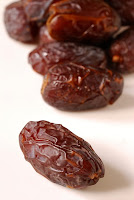
They are made with dates, though, which have sugar.
So if "sugar is sugar," why don't you say that a Lara bar is essentially the same thing as a Snickers?
-- Raymond (last name withheld)
Brooklyn, NY
The three sweeteners you mention in your first sentence are commonly referred to as "empty calories."
This means they contribute nothing but calories to our diets. There are no "redeeming qualities" to them. Not only do they not offer a single vitamin or mineral, they also don't do anything in the way of satiety.
That is precisely why 600-calories of soda don't fill you up anywhere near as much as 600 calories of a meal containing some fat, protein, and fiber.
(Slight tangent: a semi-exception can be made for pure maple syrup in the 'mineral' category, since a single tablespoon provides a third of the daily value of manganese.)
In any case, snack bars made with dates -- such as Lara -- are different from bars that tack on extra calories via a sweetener.
The dates in these bars contribute naturally-occurring sugars which co-exist with potassium, fiber, and many phytochemicals and antioxidants in that fruit.
While brown sugar and white sugar are identical from a nutritional standpoint, those two sugars are nutritionally inferior to fresh or dry fruit.
Hence, a Lara bar and a Snickers bar are worlds apart.
The Snickers bar gets a large portion of its calories from sugar and certainly does not provide the same amount of potassium, fiber, or phytochemicals as its date-based counterpart.
This is why I would love food labels to differentiate between naturally occurring versus added sugars.
A Lara bar might seem to have almost as much sugar as a Snickers bar, but we are talking about two very different sources of sweetness.


 Posts
Posts


