Showing posts with label sugar. Show all posts

April 27, 2009

Quick & Healthy Recipes: Easy Peezy (Healthy!) Sweet "Cream"

Now that high temperatures are finally back in the Northern hemisphere, the cold breakfasts that seemed so miserable a few months back are suddenly the perfect way to start the day.

I don't know about you, but I LOVE a bowl of fresh fruit and whipped cream. It makes for a great dessert, but it's certainly not the healthiest way to start your day.

Alas, here is my couldn't-be-any-easier recipe for a healthier cream that adds body, creaminess, and flavor to whatever you pair it with!

YIELDS: 1.5 cups

INGREDIENTS:

1 cup raw cashews
1 cup cold water
2 teaspoons vanilla extract
1 teaspoon coconut extract

DIRECTIONS:

Combine all ingredients in food processor and mix until a smooth consistency is reached.

For best flavor and texture, refrigerate for at least 4 hours before consuming.

This tastes absolutely wonderful mixed with a cold bowl of fresh fruit!

NUTRITION INFORMATION (per 1/4 cup serving):

141 calories
6 grams fat
1 gram saturated fat
30 milligrams sodium
1.4 grams sugar (naturally occurring)
4.6 grams protein

Excellent Source of: copper, magnesium, manganese
Good Source of: potassium, zinc

April 8, 2009

The Most Useless Part of a Food Label

Although food labels provide a significant amount of information that can help us compare the nutrient composition of different products, there is one part of these labels I pay absolutely no attention to -- and I suggest you do the same.

The "waste of space" culprit? "Calories from fat."

Not only is that figure useless, it also ends up confusing most consumers.

The only thing "calories from fat" tells you is how many of a given product's total calories per serving come from fat. Why does that matter?

This, by the way, is no secret formula. You can determine that yourself simply by multiplying the fat grams on a food label by 9 (remember, there are 9 calories in one gram of fat).

Similarly, to estimate the amount of calories from protein, multiply the grams of protein in a serving of a given product by 4.

My main issue with "calories from fat" is that it is clearly a remnant from the early 1990s "low-fat" craze.

Allow me to illustrate the inefficacy of "calories from fat."

A two-tablespoon serving of peanut butter, for example, contains 200 calories, of which 140 are from fat.

A bag of Skittles from a vending machine packs in 250 calories, of which 22.5 are from fat.

Do you see, then, how "calories from fat" is absolutely meaningless?

I say it's time to revise the food label. Drop 'calories from fat', differentiate between naturally-occurring and "added" sugars, and substitute Vitamin A (a mandatory micronutrient on food labels practically no one is deficient in) with a nutrient people should be more aware of, like potassium.

April 5, 2009

You Ask, I Answer: Skinny Bitch

What do you think of the book Skinny Bitch?

-- Jamie Pierce

Salt Lake City, UT


Skinny Bitch advertises itself as "a no-nonsense tough-love guide for savvy girls who want to stop eating crap and start looking fabulous!"

While I do give the book credit for rightfully criticizing the treatment of farm animals and dedicating a Marion Nestle-inspired chapter to the politics behind the approval process of artificial sweeteners and other substances, I summarize it as "an often inaccurate, wannabe-"shocking" nutrition book that sometimes spouts crap and is under the impression that insulting the reader is fabulous!"

Skinny Bitch claims to "finally tell you the truth about what you're feeding yourself."

However, despite its "hip" title and grrrrl-power writing style that launched it to the top of the New York Times bestseller list, it is riddled with faulty facts, hyperbolic pronouncements, and silly suggestions.

One of the authors is a former agent for Ford Models. First red flag.

Why do people who have never studied nutrition science consider themselves authorities? Would you trust a dentist who never studied dentistry? Would you trust a surgeon who never set foot in medical school? I certainly wouldn't. So why take nutrition advice from someone who hasn't dedicated time to studying it -- especially someone who works in an industry obsessed with unhealthy body shapes?

Author number two is a former model who holds a Masters degree in Holistic Nutrition from Clayton College of Natural Health. Not surprisingly, the quality and reputation of this institution are highly questioned.

There's two red flags before you even open the book.

In any case, Skinny Bitch makes the argument that the only way to be healthy is by becoming a vegan who shuns alcohol, white flour, and caffeine.

The authors repeat this over and over and particularly enjoy cursing at the reader for ever thinking they could be healthy by including any sort of meat or dairy product in their diet.

Even more disturbingly, they prey on readers' body image fears by making the case that not only does any amount of meat and dairy make you sick, it also makes you -- gasp! -- fat.

Allow me to share some passages that resulted in an "ugh!" and an eyeroll from me.

* "Soda's high level of phosphorus can increase calcium loss from the body, as can its sodium and caffeine."

While phosphoric acid in soda has indeed been linked with leached calcium from bones, it is only an issue for individuals who are not getting sufficient amounts of calcium in their diets.

Have these two ever bothered to look at the nutrition facts on a can of soda, though? Soda is very low in sodium.

A can of Coca Cola, for example, contains 35 milligrams (that's 1.4% of the suggested daily maximum intake). Ironically, the frozen vegan burger products the authors endorse contain as much as 500 milligrams of sodium per serving!

As for the caffeine-calcium link -- that's also weak, at best.

* The authors make several references to drinking 8 glasses of water a day. As I have explained in the past, this recommendation stems from a huge misunderstanding by the mainstream media.

* "One study even links caffeine to an increased susceptibility to diabetes."

Bad science alert!

Had the authors bothered to thoroughly research the literature on caffeine and diabetes, they would have discovered that caffeine consumption is linked to a lower risk of diabetes among healthy individuals. The studies they refer to are ones suggesting that people who already have diabetes may benefit from cutting back on caffeine in order to improve their blood sugar levels.

* "Acidic foods cause your body to produce fat cells..."

They apparently believe in one of the biggest -- and off-base -- nutrition myths. Lentils, blueberries, and chickpeas, for example, are categorized as "acidic foods." They now make you fat? Wow, and to think silly uninformed me considered them healthy all this time!

* "When we eat fruit with other foods... it rots and ferments in our stomach."

Not surprisingly, that ludicrous statement is not attributed to any source. Right, because it's science fiction!

* "We have food rotting, decomposing, and fermenting in our intestinal tracts and colons, hence the need for colonics."

Did the author with the Masters degree ever take a human physiology course? Clearly not! Otherwise, she would know that nothing can cling to the colon and "rot away" since the cells that line that organ slough off several times a day.

* "You don't see many tigers getting colonics, do you?"

No. Fortunately for them, rip-off artists don't exist in their species.

* "Your body can't handle animal fat, so it settles like lumpy shit all over your ass, thighs, sides, arms and stomach."

I'll let that ridiculous quote speak for itself. Is this what holistic nutritonists are being taught? Sigh...

* "If you want to get skinny, you've got to be a vegetarian."

Before I comment, let me remind you that I am a pescatarian who follows a strictly vegetarian diet 90% of the time. I am by no means a meat enthusiast, nor do I have stock in the beef industry.

That said, the idea that vegetarian = skinny is ludicrous. After all, vegetarians can eat ice cream, cakes, cookies, muffins, pizza, french fries. They can consume more calories than they need and, consequently, gain weight.

Once again, I can't help but wonder: THIS is the nonsense that passes for a #1 New York Times bestseller these days?

* "Dairy products produce mucus."

Another myth these authors clearly didn't research.

* "[Dairy products] are the perfect thing to eat if you want to be sick and have a diseased body."

As much as I dislike the narrow-minded notions that dairy products are the only way to get calcium and absolutely necessary for human health, I am also irritated by the frantic and inaccurate warnings that dairy products are equivalent to chugging Draino.

* "Consuming high amounts of dairy blocks iron absorption, contributing to iron deficiency."

Ugh. The same can be said about phytates in whole grains. In fact, the extremists folks at the Weston A. Price Organization make that very argument -- which, like this one, has very little relevance.

There is severely faulty logic at work here. Yes, calcium inhibits iron absorption, but this applies to all sources of calcium (i.e.: broccoli, bok choy, mustard greens, and tempeh) -- not just dairy.

* "Eggs are high in saturated fat."

Absolutely untrue. One egg contains approximately 1.5 grams of saturated fat -- that's 0.4 fewer grams than a tablespoon of olive oil!

* "You will pee in your pants when you see how much weight you lose from giving up dairy."

If you give up any food and don't replace the calories with something else, you will obviously lose weight. If, however, you replace the 91 calories in a cup of skim milk with 91 calories from soymilk, don't count on any changes.

* "Do you really believe milk can be made fat-free? Get your had out of your ass. Milk = fat. Butter = fat. Cheese = fat. People who think these products can be low fat or fat free = fucking morons."

The f-word! How "edgy"!

First of all, there is no such thing as low-fat or fat-free butter, so that particular example makes no sense.

Additionally, skim milk is not a mythical food item that only exists in supermarkets operated by unicorns and mermaids. So, yes, milk CAN be made fat-free.

* After pages upon pages of criticizing processed foods and sugar, the authors go on to recommend a variety of frozen vegetarian burgers, soy ice creams, and tofu hot dogs. HUH? Frozen vegetarian foods, like other frozen items, are high in sodium. Vegan hamburgers are processed food. Soy ice creams, like dairy-based ones, contain added sugars.

* From the FYI chapter: "Donate blood. You can save a life and lose weight at the same time."

I think that was when my eyebrows hit the ceiling.

Alas, I could go on (trust me, I could!), but I think you get the point.

To "make up" for their verbal abuse at the reader, the authors conclude the book with positive-thinking mantras lifted right out of The Secret ("every day in every way my stomach is getting flatter") and a clearly-tacked-on-by-a-public-relations-friendly-editor reminder that, despite the title of the book, unrealistically thin illustrations on the front and back cover, and constant references to weight, "they couldn't care less about being skinny."

April 2, 2009

Numbers Game: Answer

A 20 ounce bottle of Snapple Mixed-Up Berry Iced Tea contains 13 teaspoons of added sugar (in the form of high fructose corn syrup).

The truly frightening part is that sugar appears before tea in the ingredient list (meaning that, by weight,
there is more sugar than tea.)

The Snapple website, meanwhile, devotes an entire section to the health benefits of tea. That's akin to talking about the healthful properties of broccoli and sweet potatoes only to deep fry them in tempura batter!

Thirteen teaspoons of high fructose corn syrup in tea? They might want to rethink the "made from the best stuff on Earth" slogan.

March 31, 2009

You Ask, I Answer: Red Mango

When you blogged about Red Mango frozen yogurt, you endorsed it as a healthy treat.

I also saw that in your recent ConAgra children's frozen meal post, you commented negatively on the 18 grams of sugar it contained.

A small, original (plain) Red Mango yogurt also has 18 grams of sugar.


So now I'm slightly confused -- is Red Mango good or bad?
How can 18 grams be good in one thing, bad in another?

-- Lexi (last name withheld)

New York, NY

One of my biggest grips about food labels is that they do not differentiate between naturally-occurring sugars and added sugars.

Naturally-occurring sugars are found in fruits and vegetables (in the form of fructose) as well as dairy (as lactose).

Added sugars (mostly in the form of sucrose) are added on to foods during processing.

Although naturally-occurring and added sugars offer the same number of calories (4 per gram), naturally-occurring sugars are different in the sense they "come with the package."

When you bite into an apple, you are getting sugars along with vitamins, minerals, and a wide variety of health-promoting phytonutrients (some of which we have yet to discover!).

If you eat the same amount of sugar naturally found in an apple in the form of table sugar, you are getting empty calories (they are void of vitamins, minerals, and phytonutrients.)

In the case of Red Mango, the 18 grams of sugar refer to naturally-occurring AND added sugars. Approximately 10 to 12 of those grams are naturally-occurring, so you're only getting 6 to 8 grams (1.5 to 2 teaspoons) of added sugar.

By the way, I have a slight problem with Red Mango referring to their original flavor as "plain", since plain flavors of regular (non-frozen) yogurt do not have any added sugar.

In any case, this is very different from that frozen meal I posted about, which got its 18 grams of sugar from the chewy candies it offered as dessert.

March 30, 2009

Numbers Game: Would You Like Some Tea With Your Sugar?

A 20 ounce bottle of Snapple Mixed-Up Berry Iced Tea contains ______ teaspoons of added sugar (in the form of high fructose corn syrup).

a) 13

b) 11
.5
c) 15
d) 9


Leave your guess in the "comments" section and come back on Thursday for the answer.

March 23, 2009

In The News: Is Sugar's "Time Out" Over?

The New York Times recently profiled sugar's triumphant return.

"Blamed for hyperactivity in children and studied as an addictive substance, sugar has had its share of image problems," the paper reports, "but the widespread criticism of high-fructose corn syrup has made sugar look good by comparison."

As much as the The Sugar Association loves this shift in consumers' attitudes, I am absolutely dismayed that the issue at stake is whether sugar is more nutritious than high fructose corn syrup.

A much more accurate -- and healthful -- concept would be to simply decrease the intake of added sugars, period.

I understand the political, economic, environmental, and farming business implications behind high-fructose corn syrup that make it a bigger threat than sugar, but the fact remains that eating 100 grams of added sugars each day -- whether as high fructose corn syrup or sugar -- adds up to 400 extra calories.

Dr. Robert H. Lustig of the University of California, San Francisco Children’s Hospital sums it up perfectly: “The argument about which is better for you, sucrose or HFCS, is garbage. Both are equally bad for your health.”

March 21, 2009

Numbers Game: Answer

A single-serve 11-ounce bottle of ready-to-drink Carnation Instant Breakfast Essentials contains 5.25 teaspoons of added sugar.

I never understood Carnation Instant Breakfast's reputation as a health product. It's nothing more than fortified chocolate milk (the second ingredient is sugar).

There is absolutely no difference between starting your day with Carnation Instant Breakfast and downing a multivitamin along with a glass of Nesquik.

In fact, if your breakfast consisted of an 11 ounce glass of non-fat milk with a tablespoon of chocolate syrup, you would be consuming half the amount of sugar in a bottle of ready-to-drink Carnation Instant Breakfast.

Depending on which way the wind is blowing, Carnation Instant Breakfast and rice cakes are at the top of my "nutritionally overrated foods" list.

March 18, 2009

Made With... Clogged Arteries in Mind?

Baskin Robbins' latest offerings include "Made With..." sundaes, which add popular candies to your ice cream experience.

The "made with M&Ms" sundae, for example, consists of"three scoops of made with M&M's ice cream, layered with hot fudge and M&M's, topped with more hot fudge, marshmallow, whipped cream and more M&M's.""

Alas, this sundae is only available in one size, which adds up to:

1,090 calories
30 grams of saturated fat (approximately a day and a half's worth)
120 grams of added sugar (that's 30 teaspoons)

The "made with Snickers" sundae ("three scoops of made with Snickers ice cream, crushed Snickers pieces and caramel layers, topped with caramel, hot fudge, whipped cream and Snickers pieces", pictured at right) clocks in at:

1,000 calories
25 grams of saturated fat
93 grams of added sugar (approximately 23 teaspoons)
710 milligrams of sodium (70 more grams than a McDonald's Filet-O-Fish!)

What truly irritates me about these products is that if anyone happens to crave these sundaes, their only options are these nutritional horrors.

As we are all too aware, buying a sundae and throwing half of it out is not a reasonable expectation. Neither is having half and taking the rest home.

Why can't Baskin Robbins make this standard size a "large" and also offer a "small" sundae consisting of one scoop of ice cream and, consequently, a lot less of fudge, whipped cream, and candy pieces?

Why must an ice cream treat turn into a caloric abomination?

Food companies and fast food chains love to talk about "moderation", so how about offering it?

March 17, 2009

Numbers Game: A Few Spoonfuls of Sugar Make The Taste of Synthetic Vitamins Go Down Easier

A single-serve 11-ounce bottle of ready-to-drink Carnation Instant Breakfast Essentials contains _________ teaspoons of added sugar.

a) 4.5

b) 5.25
c) 6.75

d) 3.25


Leave your guess in the "comments" section and come back on Saturday for the answer -- and to find out why I think Carnation Instant Breakfast is terribly over hyped.

More of the Same

Join me as I peruse the breakfast food aisle and analayze the newest offerings.

First up -- Kellogg's Raisin Bran Extra (traditional Kellogg's Raisin Bran with yogurt clusters, cranberries, and almonds.)

While points are scored for the exclusive use of whole wheat and presence of seven grams of fiber, not all is peachy.

The ingredient list displays sugar on six separate occasions, and a cup of this cereal contains as much sodium as two 1-ounce bags (think vending machine size) of Doritos!

Hannah Montana's gruesome invasion of pop culture now extends to cereal thanks to Kellogg's Hannah Montana cereal ("multi-grain secret star cereal with strawberry milkshake flavoring.")

The product's nutrition label, much like Miley Cyrus' vocal capability, is absolutely lackluster.

One cup offer a paltry gram of fiber, 2 grams of protein, and five times more sodium than potassium (the marker of a heavily processed food).

The ingredient list doesn't fare out much better. First up on the list? Corn meal.

Since the cereal is made from corn and oat, it is obnoxiously advertised as "multi grain" (literally meaning "more than one grain" and further proof that "multi grain" has nothing to do with fiber content!)

Let's move on to Pop Tarts' newest flavor, chocolate banana split ("white dough, banana/chocolate striped filling, white base frosting, and crunchlettes").

Just one of these toaster pastries (not exactly the most accurate serving size, especially since you get two per individual pack) clocks in at 200 calories, 200 milligrams of sodium, and 4 teaspoons of added sugar.

Despite the illustration of fresh banana slices on the packaging, bananas are missing from the ingredient list.

Underwhelming, yet not at all surprising.

Consider Me Amazed

I always like to taste products tailored to people on modified diets (i.e.: people living with diabetes, celiac disease, or lactose intolerance).

While I do not have a condition that requires me to avoid specific ingredients or keep my intake of a certain nutrient below a certain amount, I strongly believe that to get a firm grasp on the nutritional lifestyle of a given condition, I have to be familiar with what is available to that population.

Whenever I have tried sugar-free varieties of popular sweets (mainly meant for people who have diabetes and not anyone looking to lose weight since these products add more fat to balance out the absence of sugar, thereby being just as caloric as regular versions), I have been disappointed.

The presence of sugar alcohols usually imparts a strange aftertaste, and one too many bites of sugar-free chocolate often result in awful gastrointestinal effects.

I will never forget an incident where a "sugar-free" muffin (chock full of maltitol) had me bent over in pain for two hours from the absolutely horrible stomach pain.

Alas, my faith in diabetic-friendly desserts has been reawakened by So Delicious Sugar-Free ice cream bars.

These soy (yes, they are also lactose-free!) bars (available in fudge or vanilla bar varieties) are not only sugar-free, but also "artificial-sweetener free"!

Even better, they do not pump up the fat content to make up for the decrease in sugar.

A look at the ingredient list reveals: Organic soymilk, filtered water, vegetable glycerine, soybean/safflower oil, chicory root extract, cocoa (processed with alkali), gum acacia, erythritol (sugar alcohol from natural fermentation), vanilla extract, tricalcium phosphate (a natural source of calcium), guar gum, carrageenan, natural flavors.

Before having my first bite, I was skeptical. How on Earth, I thought, are they going to make ice cream taste good without any sweetness?

Well, the folks at So Delicious quickly won me over.

So much so that I recommend these 80-calorie bars to anyone looking for a low-calorie sweet treat to satisfy a chocolate craving.

March 13, 2009

Where Do I Begin?

The folks at ConAgra appear to be quite proud of their Kid Cuisine products.

Aimed at elementary school students, these ready-to-eat lunches are -- believe it or not -- advertised as healthy items.

Let's analyze one variety. How about the Dip & Dunk Toasted Ravioli?

The initial descriptive sentence says it all: "This meal features breaded real-cheese ravioli..."

Beside the slightly disturbing fact that we have to be assured this product contains "real" cheese (as opposed to... cheez?), I find the breading of ravioli rather odd -- and unnecessary.

The nutrition label displays 9 grams of fiber (good!) and one tenth of the daily potassium requirement (not bad!), but also a third of a day's worth of sodium (yikes!) and 18 grams -- 4 and a half teaspoons' worth -- of sugar.

Oddly enough, Conagra advertises this product as containing 20 percent of MyPyramid's suggested daily servings of grains. How this is a selling point beats me; no one in this country has any problem getting their recommended servings of that food group!

The ingredient list, not surprisingly, is very long (the cheese ravioli, for instance, contain a garlic puree made with high fructose corn syrup) and includes one of my pet peeves: unnecessary sweetening.

It turns out the side of corn isn't simply corn kernels. Nope, it's corn with water and sugar.

Sugar? Added to corn?

Then there's the "fruit shaped and fruit flavored" snacks. In other words, it looks like a fruit and tastes like a fruit, but it's just sugar.

This product could easily be tweaked to provide similar flavors with a superior nutrition profile. My suggestions:

* Replace the breaded ravioli with baked, 100% whole grain cheese-and-broccoli bites.

* Offer corn kernels in their naturally sweet state.

* Replace the fruit snacks with unpeeled apple slices.

Those three changes could slash the sugar content approximately by half and lower the sodium by roughly 150 milligrams.

March 3, 2009

Quick & Healthy Recipes: Not-Really-Chocolate Dip

This is one of my favorite desserts to make for guests.

It takes no more than five minutes to prepare, is rich in body and flavor, and makes for some surprised looks when you tell your guests the "secret" ingredient (which, believe it or not, is impossible to taste)!

I like to serve this as a dessert dip for fresh strawberries, frozen sliced bananas, and whole wheat graham crackers.

YIELDS: 1.25 cups (ten 2-tablespoon servings)

INGREDIENTS:

1 medium avocado, ripe
1/3 cup unsweetened cocoa/cacao powder
1/3 cup sweetener of choice (I prefer to use agave nectar for its subtle flavor)
1 Tablespoon vanilla extract
5 Tablespoons water

DIRECTIONS:

1. Combine all ingredients in food processor.

2. Process until mixture is smooth in texture and uniform in color.

3. Store in airtight container in refrigerator for at least 4 hours.

NUTRITION INFORMATION (per serving):

72 calories
1.1 gram saturated fat
2.5 grams fiber
5.5 grams added sugar

Enjoy!

March 1, 2009

You Ask, I Answer: Sugar in Yogurt

My 3 year old daughter doesn't like milk, so yogurt is one of her sources of calcium.

When I buy yogurt for her, though, I don't know how to determine which brands have too much sugar.


One brand has 24 grams of sugar for 6 ounces. Is that too much?


-- Terri Korolev

San Francisco, CA

Dairy products' food labels take some extra skill to analyze since manufacturers are not asked to differentiate between naturally-occurring sugars and added sugars.

In this case, "naturally-occurring" sugars refers to lactose, the inherent sugar found in all dairy products.

Unlike added sugars' empty calories, naturally-occurring varieties co-exist with nutrients (the same can be said for fructose, which is present in fresh fruits.)

When shopping for yogurts, keep in mind that 6 ounces of yogurt contain 12 grams of naturally-occurring sugars.

This means that the yogurt you refer to contains an additional 12 grams (1 tablespoon) of added sugar.

I am of the school of thought that children and adults should get no more than 10 percent of their total daily calories from added sugars.

In the case of a 3-year old, that means no more than 30 or 35 grams of added sugar a day.

As a healthier alternative, see how she likes eating plain yogurt along with sweet fruits like bananas and pineapples.

You can even make it fun for her by storing fresh banana slices in a Ziploc bag, freezing them, and mixing them in with her yogurt.

February 17, 2009

A Problematic Solution

Although Kraft's self-created Sensible Solutions sticker (used to denote healthy products) can point consumers in the right direction (like with 100% whole grain Triscuit crackers), it is also used in some questionable manners.

One example? Lunchables Maxed Out Pepperoni Pizza.

This item boasts a "Sensible Solutions" sticker on the basis of being "a good source of protein" and "a good source of calcium."

The latter nutritional claim is valid, but the first one is irrelevant in a country where protein deficiency is practically unheard of.

The average child's lunchbox may be low in fiber and potassium, but with protein being found in whole grains, nuts, seeds, dairy, soy products, meats, and even vegetables, I don't think parents need to start scouting supermarket aisles for high-protein foods.

What truly puzzles me, though, is the presence of a Sensible Solutions sticker on a product that contains 850 milligrams of a sodium (a third of a day's worth), 35 grams of added sugar (thanks to the inclusion of an Airhead candy and a Kool Aid flavor pouch meant to be mixed with the included bottle of water) and a paltry two grams of fiber!

This is the problem with self-defined corporate criteria -- no one is overseeing the rubric to ensure it only pertains to healthier options.

My suggestion? Set up these criteria so that, in order to carry a Sensible Solutions sticker, a product needs to have at least 'x' amount of nutrient "A" while simultaneously limiting nutrient 'B' to 'y' amount.

Otherwise, as I saw for myself at the grocery store yesterday, KoolAid can carry a Sensible Solutions sticker simply because it is fortified with vitamin A and vitamin E!

Right, because nothing says "sensible" like 16 grams (4 teaspoons) of added sugar per 8-ounce serving.

January 29, 2009

You Ask, I Answer: Sugar Addiction

Is it true that sugar is addicting?

For example, if I am at a party and there is a whole box of [Dunkin' Donuts] munchkins it is very hard for me to only have one!


-- Laura Bulner

Miami, FL


That is one very popular myth.

Sucrose (table sugar, and what most people refer to when they say "sugar") is simply not an addictive substance.

When singled out and studied as an individual component, it has not been shown to induce physical or psychological addiction.

I do not believe any foods in and of themselves are addictive.

I think too many people jump to that conclusion by not recognizing the strong emotions that are behind many people's food choices.

The fact that someone may binge on Oreo cookies when feeling intense loneliness, sadness, or anxiety does not mean those cookies are addictive.

What it DOES point to is an addictive personality that, for whatever reason, uses food as an emotional release.

I also find that foods that get blamed as being addictive are ones that many people often severely restrict. Not surprisingly, these extreme positions then lead to overconsumption of the "forbidden" food, be it chocolate or fries.

What I always find semi-comical is that people are quick to attribute addictive qualities solely to high-calorie, sugar-laden foods, as if to make themselves appear helpless.

You never hear, for example, someone who loves celery and eats ten stalks every single day claim that "celery is addictive."

Besides, those who are somehow convinced that sugar is addictive only feel that way about the added sugar found in pastries, chocolate, and candies.

If this supposed addiction is as powerful as they claim, it makes you wonder why naturally sweet foods like fruits somehow don't "hit the spot."

Also, Laura, I am not sure why not being able to stop yourself at one individual piece of a particular food automatically makes it addictive, even more so in a situation where the food is in front of you for a long period of time.

The same thing you say about munchkins could be said about cheese, tortilla chips, sushi rolls, or blueberries!

January 24, 2009

You Ask, I Answer: Sugar/Fruit

You often say that "sugar is sugar" when talking about calories from white sugar, brown sugar, or evaporated cane juice.

But then you point out that a Lara bar is a healthy snack choice because it has no added sugar.


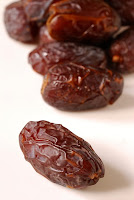
They are made with dates, though, which have sugar.

So if "sugar is sugar," why don't you say that a Lara bar is essentially the same thing as a Snickers?


-- Raymond (last name withheld)

Brooklyn, NY


The three sweeteners you mention in your first sentence are commonly referred to as "empty calories."

This means they contribute nothing but calories to our diets. There are no "redeeming qualities" to them. Not only do they not offer a single vitamin or mineral, they also don't do anything in the way of satiety.

That is precisely why 600-calories of soda don't fill you up anywhere near as much as 600 calories of a meal containing some fat, protein, and fiber.

(Slight tangent: a semi-exception can be made for pure maple syrup in the 'mineral' category, since a single tablespoon provides a third of the daily value of manganese.)

In any case, snack bars made with dates -- such as Lara -- are different from bars that tack on extra calories via a sweetener.

The dates in these bars contribute naturally-occurring sugars which co-exist with potassium, fiber, and many phytochemicals and antioxidants in that fruit.

While brown sugar and white sugar are identical from a nutritional standpoint, those two sugars are nutritionally inferior to fresh or dry fruit.

Hence, a Lara bar and a Snickers bar are worlds apart.

The Snickers bar gets a large portion of its calories from sugar and certainly does not provide the same amount of potassium, fiber, or phytochemicals as its date-based counterpart.

This is why I would love food labels to differentiate between naturally occurring versus added sugars.

A Lara bar might seem to have almost as much sugar as a Snickers bar, but we are talking about two very different sources of sweetness.

January 20, 2009

You Ask, I Answer: Dunkin' Donuts Healthier Options

Dunkin' Donuts recently came out with their new line of "DDSmart" options.

I am wondering what you think of them.


-- Dennise O'Grady

Bay Head, NJ


Dunkin' Donuts defines its DDSmart options as those that are "reduced in calories, fat, saturated fat, sugar, or sodium by at least 25 percent compared to base product or other appropriate reference product" and/or "contain ingredients that are nutritionally beneficial."

Technically, then, a 600 calorie muffin laden with sugar and saturated fat could be labeled "DDSmart" if it meets criteria #2 (healthful ingredients) by adding a sprinkle of ground flaxseed.

In essence, they are setting up guidelines that enable them to label some not-so-great options as "DDSmart."

This is why corporate, self-imposed nutrition criteria is always slightly suspect.

Consider, for instance, the inclusion of a 450 calorie blueberry muffin. It's a "DDSmart" option simply because it contains a quarter less fat than a traditional blueberry muffin.

What you aren't being told is that there is only a sixty calorie difference between the two muffins.

Dunkin' Donuts is counting on people to think "oh, it's a low fat muffin! It must be low-calorie, too!"

This nebulous advertising clearly demonstrates why calorie labeling is so crucial.

Another odd DDSmart choice? The egg and cheese English muffin, which provides a quarter of a day's worth of saturated fat and a third of the sodium daily limit.

If healthful ingredients is what they are looking for, why not at least bump the fiber content up by using 100% whole wheat English muffins?

The least offensive item -- apart from low-calorie coffees made with skim milk -- is the egg white and vegetable flatbread sandwich.

The multigrain bread contains some whole wheat flour and the entire sandwich clocks in at 290 calories. Still, you're looking at 680 milligrams of sodium.

The smartest thing you can do is not depend on fast food companies for your daily breakfast needs.

January 10, 2009

Celebrity Diet Secrets: A Steaming Pile Of... Goop

Last September, Gwyneth Paltrow launched a lifestyle and wellness website named Goop, which she describes as a "collection of experiences [of] what makes life good."

Well, wouldn't you know it, in her latest newsletter, "Gwyn" talks about... detox diets!

"I like to do fasts and detoxes a couple of times during the year, the most hardcore one being the Master Cleanse I did last spring," she writes.

Turns out the the A-lister's detox specialist -- who I refuse to name in this post since I do not want to promote him with yet another Google hit -- told her the Master Cleanse wasn't healthy because it doesn't adequately meet the liver's nutritional demands.

Forget the liver, how about the fact that it simply doesn't provide much of anything in the way of nutrition and that there is absolutely no reason to believe that lemon juice, maple syrup, and cayenne pepper play any role in detoxing?

I digress.

Gwyneth then proceeds to share her own "detox-doctor approved" seven-day elimination diet to "help decrease the amount of work your digestive system has to do."

If it's any consolation, she will "be suffering along with you to kickstart [her] year a bit lighter."

Before going into detail, she shares tips from her detox-doctor, including:

"If your bowel movements get sluggish, you can accelerate things by drinking half a cup of castor oil or using a mild herbal laxative. Bowel elimination is paramount for correct detoxification."

Well, yes, bowel elimination is paramount to overall good health, as it is one of the body's ways of removing waste material.

That said, the castor oil and herbal laxative suggestions are ridiculous and, in my opinion, are tacked on in an attempt to make this detox plan seem special.

Whatever happened to simply speeding up digestive transit by consuming a higher quantity of fiber-rich foods?

Anyhow, you can see Gwyneth's week-long detox plan here. Disturbingly, the average day barely adds up to 1,000 calories!

For the record, "there can be no dairy, grains with gluten, meat, shellfish, anything processed (including all soy products), fatty nuts, nightshades (potatoes, tomatoes, peppers and eggplant), condiments, sugar and obviously no alcohol, caffeine or soda."

Which makes me wonder:

* What are examples of non fatty nuts?
* What about those four nightshade vegetables makes them detox "enemies"? I would just love to hear her "detox doctor" explain this one.
* If sugar is banned for this plan, then why is the Master Cleanse -- which calls for cups and cups of maple syrup (sugar!) -- considered such a pinnacle of health?
* If dairy is banned, why do some of Gwynth's recipes call for whey protein powder?
* If sugar is banned, why do some of Gwyneth's recipes call for agave nectar?
* If "anything processed" is banned, why is almond milk used in some recipes?

Above all, why do celebrities with no health credentials think they are authorities on nutrition?

Thank you to Kristin MacBride for passing along the newsletter link.